
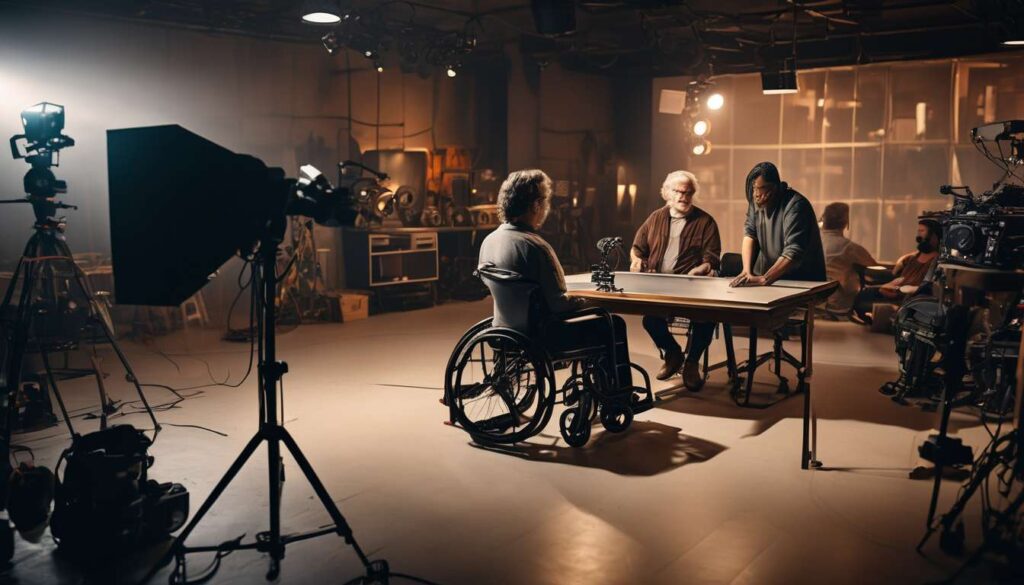
Revealing parallels between mainstream film accessibility and adult movie production helps us see possibilities we once overlooked.
We have watched closed captioning, audio description, and inclusive casting transform cinemas and streaming platforms, and we now recognize that those same tools can—and should—reshape adult entertainment.
As producers, performers, and advocates, we are interrogating how consent-driven practices, accessible interfaces, and diversified representation intersect with erotic content to expand audiences and dignify participants.
- Consent-driven practices include clear, documented agreements; ongoing check-ins; and accessible communication methods.
- Accessible interfaces cover website navigation, screen-reader compatibility, and privacy-minded account controls.
- Diversified representation embraces performers of varied bodies, genders, abilities, and neurotypes.
We are charting technical adaptations—subtitle standards, tactile interfaces, and descriptive audio—that respect privacy while enhancing access.
- Subtitle and caption standards: accurate, synchronized captions and clear labeling of nonverbal sounds.
- Descriptive audio: narration that conveys visual context without diminishing erotic intent.
- Tactile interfaces: haptic options and hardware-agnostic controls designed for varied mobility and sensation.
We are also confronting cultural barriers: stigma, platform restrictions, and industry inertia that have long sidelined disability considerations.
- Stigma: public and internalized biases that frame accessibility as unnecessary or pornographically risky.
- Platform restrictions: content moderation policies that may disallow accessibility features or limit distribution.
- Industry inertia: lack of training, resources, or incentive structures for accessible production.
By mapping lessons from mainstream accessibility initiatives onto adult production, we aim to create ethically produced, ergonomically designed, and legally sound content that serves varied bodies, minds, and desires.
- Ethically produced: informed consent, compensation equity, and participant safety protocols.
- Ergonomically designed: sets, props, and choreography adjusted for comfort and function.
- Legally sound: compliance with privacy laws, accessibility regulations where applicable, and clear age-verification practices.
Together, we can push an industry toward inclusion without compromising safety, artistry, or autonomy.
- Collaboration among disabled advocates, performers, technologists, and distributors will be essential.
- Iterative testing and feedback from intended audiences must guide design and policy choices.
- Education and advocacy can shift norms, fund accessibility work, and influence platform policies.
Industry Landscape
We’re seeing more studios, performers, and platforms acknowledge accessibility needs and begin adapting production practices accordingly.
We’re committed to making accessible adult content that centers dignity and shared participation, not afterthoughts.
Inclusive casting:
- Across sets, we’re adopting practices so performers with disabilities see themselves represented and can contribute authentically.
- This means recruiting intentionally, accommodating diverse needs during auditions, and valuing lived experience.
Refining consent communication:
- We use clear pre-scene briefings, tactile or visual cues, and documented preferences to ensure safety and mutual understanding.
- These measures make consent ongoing and actionable, not just a one-time checklist.
Building knowledgeable teams:
- We’re hiring accessibility consultants and offering training so crew and talent feel supported.
- Teams value lived experience and incorporate that expertise into planning and execution.
Reducing barriers on set:
- We adjust locations, equipment, and schedules to promote belonging.
- Practical steps include accessible entrances, adaptable lighting and sound setups, and flexible call times.
Balancing creativity and accommodation:
- We measure progress through feedback loops rather than assumptions.
- By treating accessibility as integral to production quality, we strengthen relationships with audiences and performers alike.
Ongoing commitment:
- This shift isn’t complete, but we’re moving deliberately—guided by respect, transparency, and shared responsibility—to make the industry more inclusive.
Accessibility Standards
We define clear accessibility standards—covering captioning, audio descriptions, tactile cues, and on-set accommodations—so creators and platforms can consistently meet performers’ and viewers’ needs.
We set measurable requirements for captioning that include:
- Accuracy (captions must accurately reflect spoken dialogue and important non-speech audio).
- Timing (captions must synchronize with speech and on-screen events).
- Customizable display (viewers must be able to adjust size, color, and placement).
We require high-quality audio descriptions that convey scene context without sensationalizing, focusing on essential visual information while preserving tone and pacing.
We establish tactile cue protocols and sensory-friendly production options to let performers with sensory differences participate comfortably, including alternative signaling methods and controlled sensory environments.
We commit to embedding accessibility at every production stage—from pre-production briefs and inclusive casting calls to accessible sets and post-production checks—to ensure accessibility is not an afterthought.
We provide training and resources for crews on assistive technologies and offer vendor guidance to ensure compatibility across distribution platforms.
We create straightforward reporting and remediation pathways so accessibility issues are fixed quickly and respectfully, with clear escalation steps and timelines.
We center accessibility in policy and practice to build an industry where diverse performers feel they belong and audiences can enjoy content fully.
We integrate consent communication norms into workflows to ensure clarity and safety without delaying creative processes, embedding consent checks into standard production protocols.
Consent and Communication
We prioritize clear, ongoing consent and open communication throughout production.
Consent is continuous and revocable. Performers can set boundaries, ask for adjustments, and withdraw consent at any time.
We create explicit, simple protocols for consent communication.
- Protocols are repeatable and accessible to everyone involved.
- Normalizing questions and expressing needs reduces stigma and uncertainty.
We train crews to use plain language, visual cues, and written confirmations.
- Training ensures performers with diverse sensory or cognitive needs feel secure.
- Visual and written options complement verbal checks for clarity and accessibility.
We schedule regular check-ins and document preferences respectfully.
- Check-ins occur before, during, and after scenes.
- Preferences and limits are documented to avoid assumptions and to honor autonomy.
Call sheets and release forms support accessible-adult-content principles.
- Use readable formats and plain-text summaries.
- Provide alternative formats on request.
We cultivate a supportive culture around accommodations and intervention.
- Performers requesting accommodations are met with support, not suspicion.
- Bystanders and coordinators are expected to intervene when communication breaks down.
We center consent communication on autonomy, dignity, and safety.
Belonging grows when consent communication is routine, transparent, and respectful.
Inclusive Casting
We prioritize casting practices that actively seek performers of diverse bodies, abilities, ages, genders, and backgrounds to ensure representation is intentional and respectful.
We build inclusive casting systems that remove barriers to entry.
- Accessible audition notices
- Flexible scheduling
- Venues that accommodate mobility and sensory needs
We center clear consent communication at every stage.
- Train casting teams to discuss boundaries and accommodations with empathy and transparency
- Make contractual language plain
- Provide support people who can facilitate conversations when requested
We aim for accessible adult content that reflects genuine diversity, not token gestures.
- Create roles written with nuance
- Involve performers in shaping portrayals
We collect feedback from performers and communities to refine our processes and measure impact.
We foster a culture where everyone feels safe to express needs and where casting choices contribute to belonging, dignity, and ethical representation across productions.
Technical Adaptations
We will adapt production technologies and workflows to remove physical, sensory, and cognitive barriers so performers and crew with diverse needs can fully participate.
We will invest in accessible adult-content tools and make them standard, not optional.
- Captioning
- Audio description
- Tactile aids
- Adjustable set elements
We will design stages and workspaces so everyone can move and work safely.
- Ramps and accessible pathways
- Lighting controls (including low-glare and adjustable intensity)
- Quiet zones and sensory-friendly spaces
We will train crews on assistive devices and integrate communication-supportive software.
- Training on common assistive devices and best practices
- Software for varied communication methods, including:
- Text-based confirmations for consent and directions
- Visual cue systems and customizable interfaces
We will prioritize inclusive casting and remove barriers in submission and audition processes.
- Make submission platforms and forms accessible
- Offer reasonable adjustments during auditions and shoots
We will document technical protocols, share best practices, and use checklists to prevent missed accommodations.
- Written protocols for common scenarios
- Team-wide sharing of lessons learned and resources
- Pre-shoot and on-set checklists for accommodations
We will test workflows with community members, iterate from feedback, and budget for accessibility from the start.
- Community testing and participatory design
- Iterative improvements based on real-world feedback
- Dedicated budget lines for accessibility measures
By treating adaptations as routine production elements, we will build trust, foster belonging, and create content that is genuinely accessible without compromising creativity or safety.
Platform and Policy Barriers
Many platform rules, payment restrictions, and content moderation policies still block or limit distribution and monetization of accessible adult materials, and we must actively engage platforms and policymakers to change that.
We face opaque takedowns, limited payment processors, and metadata rules that strip accessibility tags, which keeps accessible adult content out of reach for many creators and viewers.
We won’t accept policies that force creators to choose between compliance and accessibility.
- We will lobby for clear guidelines that allow captions, audio descriptions, and accessible interfaces without penalizing performers or producers.
- We will push for fair payment pathways so inclusive casting and performers with disabilities can earn reliably.
Policy reform should include standards for consent communication that protect participants while respecting privacy and access needs.
We want platforms to consult disability advocates and industry stakeholders, so rules are practical and humane.
We belong in this conversation, and by uniting our voices we can reshape platform and policy frameworks to expand access, safety, and economic opportunity across the sector.
Production Practices
We will adopt production practices that prioritize universal access from pre-production through post.
Key accessibility features will be planned and budgeted, not added as afterthoughts.
- Captions
- Audio description
- Tactile and mobility accommodations
- Communication supports (interpreters, captioners, tactile describers)
We will design shoots so performers with varied abilities feel valued and safe.
- Integrate inclusive casting and accessible adult-content principles into call sheets and contracts.
- Ensure consent processes are clear and documented.
Crews will be trained on clear consent communication and on using assistive devices.
- Provide training for working with assistive technology and disability etiquette.
- Ensure interpreters, captioners, or tactile describers are scheduled and present when needed.
Scheduling and logistics will account for accessibility needs.
- Schedule extra time for accessibility measures and adjustments.
- Set up accessible sets, rest areas, and dressing rooms.
- Provide transport and mobility aids as required.
Post-production will honor accessibility and choice.
- Ensure caption accuracy and timing.
- Create thoughtful audio descriptions of visual scenes.
- Produce multiple formats so audiences can choose what works best.
We will document and share accessibility practices.
- Record accessibility choices and rationale.
- Share internal guidelines so practices scale across projects.
We will commit budgets and resources to accessibility.
- Allocate funding for features that improve safety, creativity, and audience reach.
- Treat accessibility as a core professional standard.
Together, these practices create production procedures that welcome diverse bodies, needs, and expressions while maintaining professional standards.
Community Collaboration
We will partner with disability-led organizations, performers with lived experience, and accessibility professionals to co-create practices, resources, and feedback loops that make our productions truly inclusive. Advisory panels and regular workshops will be built to shape accessible adult content standards, ensuring materials are usable, respectful, and representative. Inclusive casting will invite community members into casting discussions to prioritize representation of diverse bodies, identities, and abilities, and contributors will be compensated fairly for their expertise.
We will establish clear channels for consent communication, co-developing scripts, signals, and protocols that honor autonomy and safety on and off set. Toolkits and practical resources — including captioning templates and tactile or sensory considerations — will be shared so smaller producers can adopt best practices quickly.
We will measure progress with community-driven metrics and publish transparent reports that welcome critique and improvement. Mentorship and training programs will be created to elevate disabled creators and crew, fostering belonging and sustainable careers.
By centering lived experience and ongoing collaboration, we will make adult film production more accessible, ethical, and accountable for everyone involved.
How do performers with progressive or fluctuating disabilities manage changes in ability over the course of a long-term contract or ongoing series?
We’re asking how performers with progressive or fluctuating disabilities manage changing abilities during long contracts or series.
We adapt collaboratively.
- We build flexible schedules (e.g., staggered call times, additional breaks, adjustable workload).
- We modify scenes and equipment (props, blocking, assistive devices, accessible staging).
- We use clear communication and regular check-ins (daily briefings, checklists, signal systems).
We document accommodations and revisit contracts when needs shift.
- Written accommodation plans and addenda.
- Formal review points to update responsibilities, hours, or supports.
We support cross-training and backup staffing.
- Train colleagues to cover essential tasks or alternate blocking.
- Maintain a list of trained backups for key roles.
We prioritize consent and safety, and ensure performers lead decisions about their capabilities.
- Performer-led choices about what they can safely perform.
- Emphasis on dignity, sustainability, and shared responsibility for adjustments.
What specific legal liabilities could small, independent producers face if accessibility features unintentionally disclose a performer’s disability status or medical information?
Legal risks if accessibility features reveal a performer’s disability or medical information
Privacy and confidentiality liability. Unintended disclosure of a performer’s disability or medical information can create civil liability for privacy breaches under general privacy or data-protection laws. This includes claims for negligence, invasion of privacy, or breach of implied confidentiality.
Health-information and sector-specific laws. If the information qualifies as protected health information under statutes like HIPAA (U.S.) or similar laws elsewhere, unauthorized disclosure can trigger statutory penalties and regulatory enforcement.
Disability-rights and anti-discrimination claims. Revealing a disability may give rise to discrimination claims under disability-rights statutes (for example, the ADA in the U.S.), particularly if the disclosure leads to adverse treatment, exclusion, or stigmatization.
Contractual and consent disputes. Performers or their representatives may sue for breach of contract or for exceeding the scope of consent given for recording, distribution, or accessibility adaptations.
Regulatory fines and administrative actions. Regulatory agencies can impose fines or sanctions for failures to protect sensitive personal data or to comply with accessibility-related rules and privacy standards.
Reputational harm and consequential civil suits. Public exposure of sensitive medical information can damage reputation and lead to follow-on civil litigation, including emotional-distress claims and demands for injunctive relief.
Risk-reduction measures to implement
1. Consent and release protocols.
- Obtain explicit, informed, and documented consent that specifically covers accessibility features and the potential ways content may expose personal information.
- Use plain-language releases describing what will be captured, who will access it, and how it will be used or shared.
2. Data minimization and redaction.
- Limit collection and storage to only what is necessary for the accessibility purpose.
- Where possible, redact or anonymize medical or disability details before distributing accessible versions.
3. Secure handling and access controls.
- Apply strong technical and organizational safeguards (encryption, access logs, role-based access) for files and metadata containing sensitive information.
- Restrict administrative access to need-to-know personnel and vendors.
4. Clear disclosure and labeling practices.
- Add notices in accessible materials explaining any sensitive information included and the performer’s consent status.
- Provide opt-out mechanisms or edited versions that remove sensitive details.
5. Contractual protections with vendors.
- Require vendors and accessibility providers to follow confidentiality standards, data-protection clauses, and breach-notification obligations.
- Include indemnity and limitation-of-liability provisions where appropriate.
6. Training, policies, and incident response.
- Train staff on privacy, disability-sensitive practices, and how accessibility features can inadvertently disclose sensitive information.
- Maintain an incident-response plan for suspected disclosures, including timely notification, mitigation, and documentation.
7. Legal review and compliance monitoring.
- Consult counsel to map applicable laws (privacy, health data, disability statutes) in relevant jurisdictions and tailor policies accordingly.
- Regularly audit practices and update consents, contracts, and technical measures.
Key takeaways
Proactive controls reduce legal exposure. The principal defenses are informed, specific consent; limiting and securing sensitive data; transparent disclosure practices; and strong contractual and technical safeguards.
Regulatory and reputational risks can be significant. Even unintentional disclosures can trigger fines, discrimination claims, and reputational damage, so treat accessibility workflows as potential channels for sensitive information and govern them accordingly.
How are royalty and residual payment structures being adapted (if at all) to fairly compensate performers who provide extra accessibility-related labor, such as describing scenes for audio description or mentoring co-performers?
Issue: We’re seeing limited formal updates to royalty and residual structures; most agreements don’t yet account for extra accessibility labor.
Proposal: Advocate for explicit pay rates or bonuses for accessibility tasks, including:
- Audio description
- On-set or postproduction accessibility coaching
- Mentoring and training of other performers
- Creation and review of accessibility assets
Compensation formula: Push for residual formulas that factor ongoing use of accessibility assets, for example:
- Payment tied to every reuse or redistribution of media containing accessibility contributions.
- Ongoing royalty percentages or flat periodic payments for continued exploitation.
- Bonus multipliers when accessibility assets increase distribution or revenue.
Contract safeguards: Require written addenda and collective bargaining recognition to ensure terms are enforceable and standardized.
Transparency and tracking: Insist on transparent reporting so performers’ extra contributions are:
- Acknowledged in credits and records
- Fairly compensated according to agreed formulas or rates
- Traceable over time through regular statements and audit rights
Goal: Ensure accessibility work by performers is explicitly recognized, fairly paid, and documented for ongoing compensation.
Conclusion
You’ve seen how the adult film industry is changing to include more accessible practices.
By following clear standards, improving communication and consent, and adapting casting and technology, you can help make productions safer and more inclusive.
Expect platform and policy hurdles, but know collaboration with communities and thoughtful production choices moves things forward.
If you push for these changes in your work or advocacy, you’ll help create a more equitable industry for performers and audiences alike.